


⚔️ VIKINGS
(c. 793–1066 CE)
[IMAGE – Viking ship at sea
🧭 1. Who Were the Vikings?
The Vikings were seafaring people from Scandinavia — modern Norway, Sweden, and Denmark — who dominated northern Europe between the 8th and 11th centuries.
They were not a unified nation but a collection of tribes and chieftaincies bound by common language (Old Norse) and beliefs in Norse gods like Odin, Thor, and Freyja.
Driven by adventure, trade, and survival, they became the most skilled sailors and explorers of the early medieval world.
[IMAGE – Map of Scandinavia]
⛵ 2. The Viking Age Begins (793 CE)
The Viking Age started with the raid on the Lindisfarne monastery in Northumbria, England, in 793 CE. Monks were attacked, gold and silver were stolen, and Christian Europe was shocked.
This event marked the beginning of three centuries of expansion, fueled by limited farmland at home and the promise of wealth abroad.
[IMAGE – Lindisfarne raid painting]
⚙️ 3. Masters of the Sea
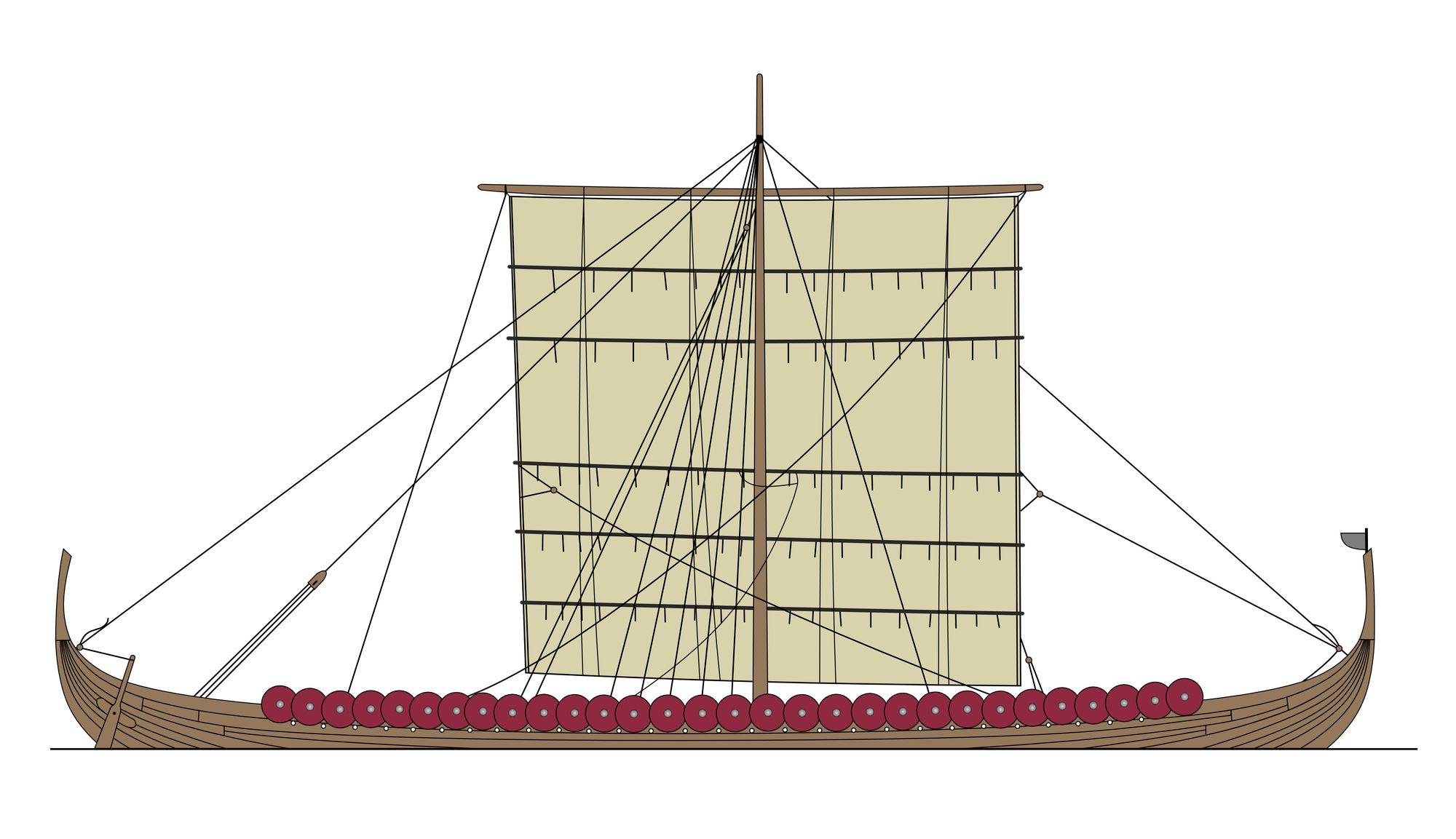
The key to Viking power was their longship — a masterpiece of design.
- Built from oak and flexible ribs.
- Capable of both ocean travel and river navigation.
- Could be beached anywhere for surprise raids.
Their ships could reach 20 knots, carrying warriors across thousands of kilometers, from Iceland to Baghdad.
Fun Fact: Vikings used a special crystal, the sunstone, to find the sun’s position even on cloudy days.
⚖️ 4. Society and Daily Life
Viking society had three main classes:
- 👑 Jarls – nobles and war leaders.
- 🛠️ Karls – free farmers and craftsmen.
- ⛓️ Thralls – slaves or captives.
Women had remarkable rights for the time — they could own land, inherit property, and request divorce.
Homes were longhouses made of wood, turf, and stone, where families and animals lived together around a central fire.
[IMAGE – Longhouse interior]
⚔️ 5. Warriors and Raiders
Vikings were feared for their discipline, tactics, and ferocity. They used axes, swords, spears, and round shields.
Raids were strategic, targeting monasteries, trade routes, and unprotected coasts. Yet, many Vikings later settled in those same lands, blending with local cultures.
Fun Fact: The famous “horned helmet” is a modern myth — no archaeological proof exists of Vikings wearing them.
[IMAGE – Viking warrior reenactment]
💰 6. Traders and Explorers
Not all Vikings were raiders — many were merchants and diplomats.
They traded furs, amber, and iron for silver, silk, and spices.
Major trading centers:
- 🏛️ Hedeby (Denmark)
- ⚓ Birka (Sweden)
- 🪶 Kaupang (Norway)
Their trade routes connected Scandinavia to Byzantium and even the Caliphate of Baghdad.
Fun Fact: Arabic coins have been found in Viking graves across Sweden — proof of this vast network.
[IMAGE – Viking trade map]
🌍 7. Exploration and Expansion
Vikings reached every corner of the known world:
- 🌊 Leif Erikson explored Vinland (North America) around 1000 CE.
- ❄️ Erik the Red founded colonies in Greenland.
- 🏰 In France, Viking settlers founded Normandy.
- 🕊️ In Russia, Norse rulers established Kievan Rus.
They discovered new lands, created kingdoms, and linked distant cultures — a medieval global network.
[IMAGE – Routes of Viking exploration]
⚡ 8. Religion and Mythology
The Vikings worshipped a rich pantheon of gods:
- Odin – god of wisdom and war.
- Thor – protector of mankind.
- Freyja – goddess of love and fertility.
They believed in Valhalla, where brave warriors feasted after death.
Their sacred texts, later written down as the Eddas, describe the creation and end of the world — Ragnarök.
Fun Fact: English weekdays “Tuesday,” “Wednesday,” and “Thursday” come from Norse gods Tyr, Odin (Woden), and Thor.
[IMAGE – Yggdrasil tree illustration]
🕰️ 9. The End of the Viking Age (1066 CE)
By the 11th century, Scandinavia began to unite under Christian kings.
The Battle of Stamford Bridge in 1066 CE, where Harald Hardrada was defeated by the English, is seen as the final Viking battle.
From that point, Viking raiders became kingdom builders, merging with the rest of Christian Europe.
[IMAGE – Battle of Stamford Bridge]
🧬 10. Viking Legacy
The Viking spirit never disappeared.
Their language shaped English — words like sky, egg, knife, and husband are Norse.
Their laws, art, and navigation skills influenced Europe for centuries.
Modern archaeology and DNA research show Viking presence from Scotland to Ukraine.
Today, the term “Viking” stands for courage, exploration, and independence — a symbol of human adventure.
[IMAGE – Viking artifacts display]
📅 Key Timeline
| Year | Event |
|---|---|
| 793 CE | Raid on Lindisfarne – start of the Viking Age |
| 865 CE | Great Heathen Army invades England |
| 911 CE | Vikings settle in Normandy |
| 1000 CE | Leif Erikson reaches North America |
| 1066 CE | Battle of Stamford Bridge – end of Viking Age |
📚 Quick Facts
- Origin: Norway, Sweden, Denmark
- Language: Old Norse
- Religion: Norse Paganism → Christianity
- Symbols: Longship, Thor’s Hammer
- Economy: Farming, Raiding, Trading
- Famous Explorers: Erik the Red, Leif Erikson
💡 Summary
From raiders to rulers, the Vikings shaped medieval Europe through warfare, trade, and exploration.
Their ships carried not just weapons, but ideas, technology, and culture — bridging worlds from the Arctic Circle to the Middle East.
The Viking legacy is one of fearless curiosity and adaptability — a reminder that even the fiercest warriors were also builders, dreamers, and explorers.


